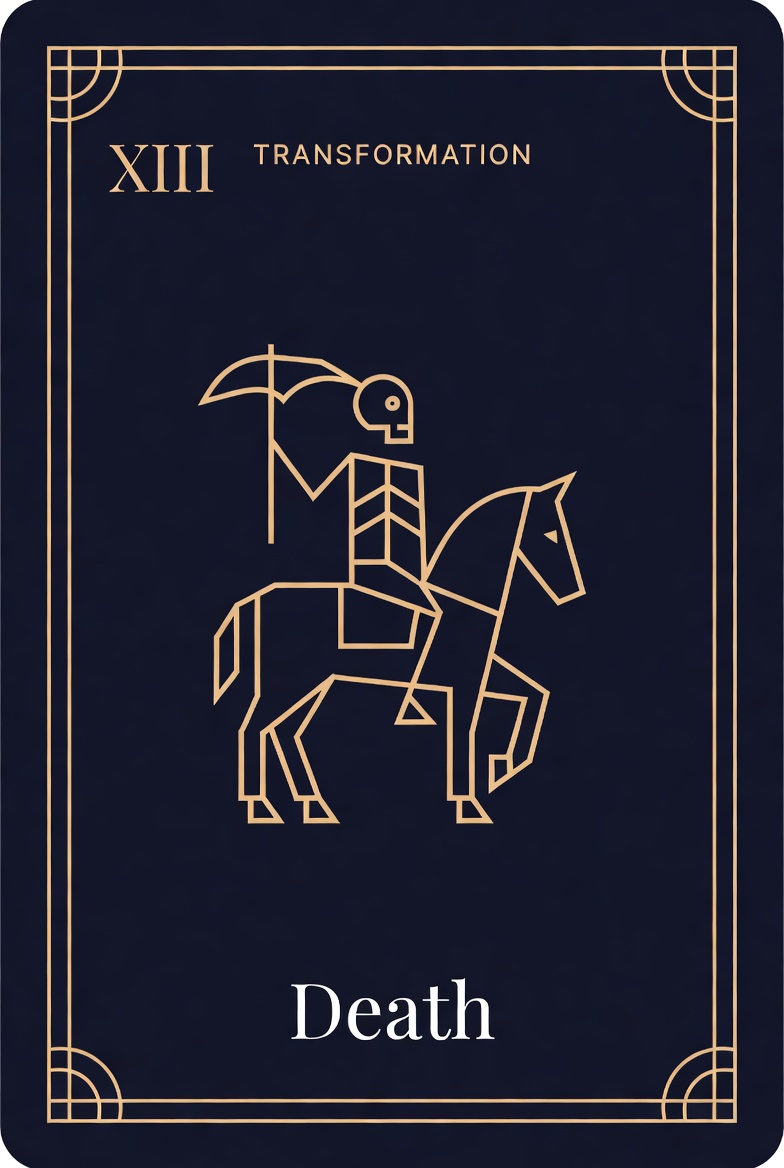
Correspondence systems differ by lineage. These are traditional study associations, not astronomical positions or factual predictions.
The central reading
Two orientations. One field of meaning.
Upright
endings
transformation
transition
release
rebirth
Death is the least literal card in the deck and the most persistently misread. It marks the definitive end of a chapter, an identity, or a set of arrangements that have outlived their function. In a reading, it indicates that something is genuinely finishing, and that resisting the finish will only prolong the discomfort of it. The card carries no malice and offers no negotiation; it simply removes what has already stopped being alive so that the space can be occupied by something else. Scorpio's involvement points to depth, secrecy, and the parts of transformation that happen out of sight before they become visible. When Death appears, the useful question is not whether the ending can be avoided but what you are still holding that belongs to the version of your life now concluding. Let it go cleanly and the passage is quick.
Reversed
resistance
stagnation
fear of change
clinging
unfinished endings
Reversed, Death indicates an ending you are refusing to complete. You may be maintaining a relationship, role, or self-image long past its expiry, spending considerable energy on preservation rather than release. It can also describe a transition that has stalled midway, leaving you between two lives without committing to either. The card asks what you are afraid will disappear along with the thing you are clinging to.
Read the image
Symbolism before shorthand.
A skeletal rider in black armour advances on a pale horse, carrying a black banner marked with a white five-petalled rose, the Mystic Rose signifying life renewed rather than extinguished. Beneath the horse's hooves lies a fallen king, his crown displaced, indicating that this process observes no rank or privilege. Three figures meet the rider differently: a bishop stands in his mitre with hands clasped in acceptance, a young woman turns her face away in refusal, and a child kneels offering flowers without fear. Their contrasting postures map the range of human responses to inevitable change. In the far background, between two standing pillars, the sun rises over the horizon, and a river winds quietly toward it. The composition insists that what appears as termination is structurally a passage.
In context
Where the card meets a life.
01
Love & relationship
Death signals a relationship reaching a genuine turning point. That may mean an ending, but more often it means the version of the partnership you have both been maintaining is finished and a truer one is available. If you have been rehearsing the same argument for two years, this card says the argument has died and something honest can now be said instead. Reversed, it points to a connection kept alive by habit and shared history rather than present feeling.
02
Work & direction
Professionally, this card marks the close of a role, project, or working identity. A restructure, a resignation you have been circling for months, or a discipline you have quietly outgrown. It is rarely a disaster and frequently a relief once the decision is actually made. Reversed, it describes staying in a job whose usefulness ended some time ago, where the salary is now the only remaining argument for staying.
03
Spiritual growth
Spiritually, Death describes the dismantling of a belief structure that once organised your understanding and no longer holds. This is the phase where an old framework falls away and the replacement has not yet arrived, which can feel like loss of faith when it is actually its renovation. Reversed, it warns against clutching a practice or teaching that has become recitation rather than living inquiry.
04
Shadow expression
The shadow of Death is destruction mistaken for growth. It burns down relationships, jobs, and commitments on a schedule, calling each demolition transformation, because ending things is easier than staying present through the slower work of changing within them.
For the journal
Stay with the question.
01
What in my life has already ended that I am still maintaining the appearance of?
02
What am I afraid I will lose about myself if I let this particular thing go?
03
Where am I calling something a transition when I have simply stopped midway?