Correspondence systems differ by lineage. These are traditional study associations, not astronomical positions or factual predictions.
The central reading
Two orientations. One field of meaning.
Upright
tradition
institutions
belief systems
mentorship
conformity
The Hierophant represents spiritual lineage, shared belief systems, cultural institutions, and formal education. While The High Priestess holds secret, intuitive wisdom, The Hierophant translates spiritual concepts into social structures, doctrines, and shared rituals. In a reading, he often indicates a time to engage with established traditions, work within existing frameworks, or seek guidance from a trusted mentor. He highlights the value of collective wisdom, lineage, and structured study. This card encourages learning from proven methods before attempting to innovate. It can also point to participation in formal ceremonies, such as weddings, educational graduations, or religious rites. Engaging with a lineage provides stability, belonging, and tested frameworks for understanding the human experience. He is frequently misread as merely conservative. What he actually offers is the accumulated correction of many people who attempted the same thing before you, which is worth understanding thoroughly before deciding to discard it.
Reversed
rebellion
dogma
unconventionality
hypocrisy
subversion
Reversed, The Hierophant signals a call to question authority, challenge rigid dogmas, or break away from outdated institutional rules. You may feel stifled by societal pressure or hypocritical leadership. It encourages spiritual independence and creating your own moral code, though it warns against reactionary rebellion purely for the sake of opposition without a constructive alternative.
Read the image
Symbolism before shorthand.
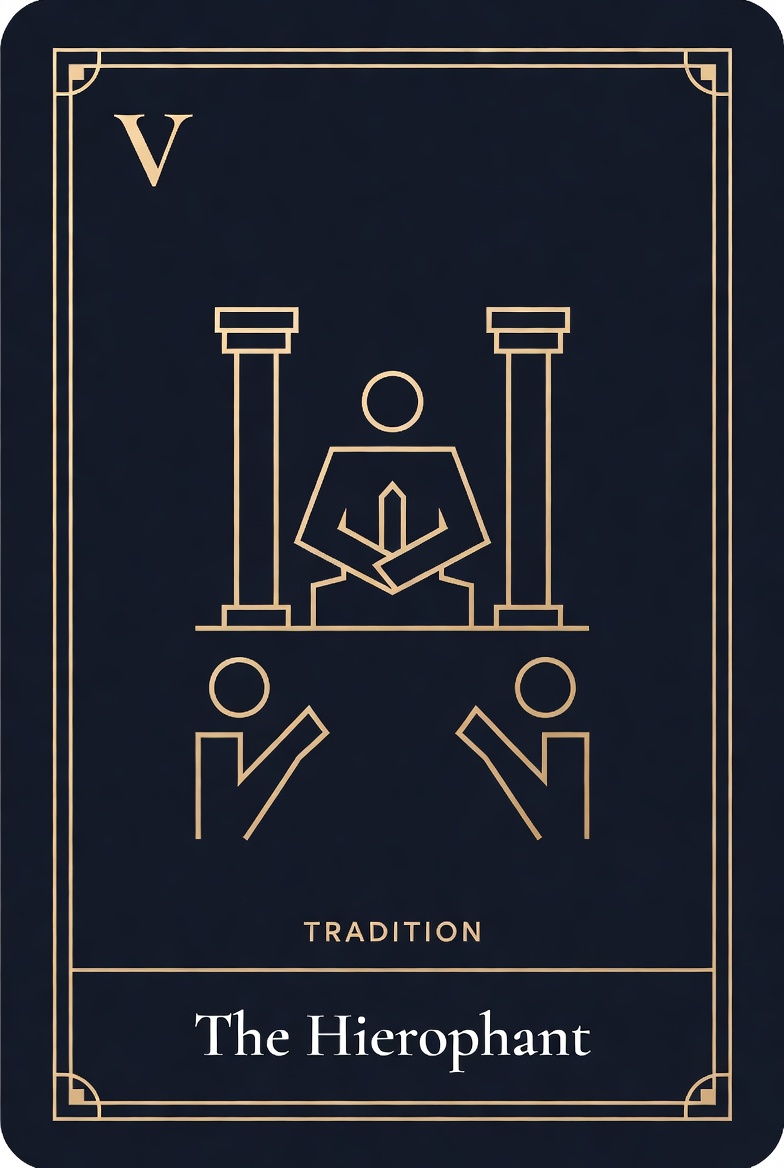
Seated between two stone pillars of a sacred temple, The Hierophant wears a triple crown and ornate papal robes. In his left hand, he holds a papal cross with three bars, representing his authority over the physical, mental, and spiritual realms. His right hand is raised in a blessing, with two fingers pointing upward and two pointing downward, bridging divine law and earthly congregation. At his feet cross two golden keys, symbolising the unlocking of esoteric doctrines and institutional knowledge. Kneeling before him are two tonsured initiates wearing robes adorned with roses and lilies, ready to receive spiritual instruction. The scene depicts formal initiation, lineage, and the transmission of established traditions within a structured belief system.
In context
Where the card meets a life.
01
Love & relationship
In love, The Hierophant favours formal commitment and shared frameworks: marriage, moving in, meeting the family, agreeing openly on how you both intend to live. It suits partnerships strengthened by ritual and by tradition. Reversed, it suggests non-traditional arrangements that work perfectly well, clashing core beliefs that no amount of goodwill resolves, or family pressure to conform to a template neither of you actually wants.
02
Work & direction
Professionally, he points to established structures: formal qualification, working inside an institution, or finding a mentor who has already walked the route you are attempting. He favours learning the craft before improvising on it. Reversed, it urges breaking from bureaucratic stagnation, challenging a culture that has stopped questioning itself, or leaving a field whose orthodoxy no longer describes reality.
03
Spiritual growth
Spiritually, The Hierophant advocates lineage: studying within a tradition, submitting to a structure, accepting that a practice refined over centuries may know something you do not. Reversed, it urges direct experience over received doctrine, and warns against a teacher or system that treats questions as disloyalty rather than as the point.
04
Shadow expression
The shadow Hierophant weaponises tradition. He treats inherited doctrine as beyond examination, mistakes his position for his authority, and cultivates dependency in students who might otherwise outgrow him and discover the lineage was always larger than the man teaching it.
For the journal
Stay with the question.
01
Which traditions or institutional beliefs am I following out of habit rather than conviction?
02
Where in my life would I benefit from seeking guidance from a formal mentor or teacher?
03
How can I honour my need for community without sacrificing my individuality?